

Daily Myocardial Remodeling Idea: MBNL2–TPM3 Splicing Axis in Cardiac Hypertrophy
(1) Abstract:
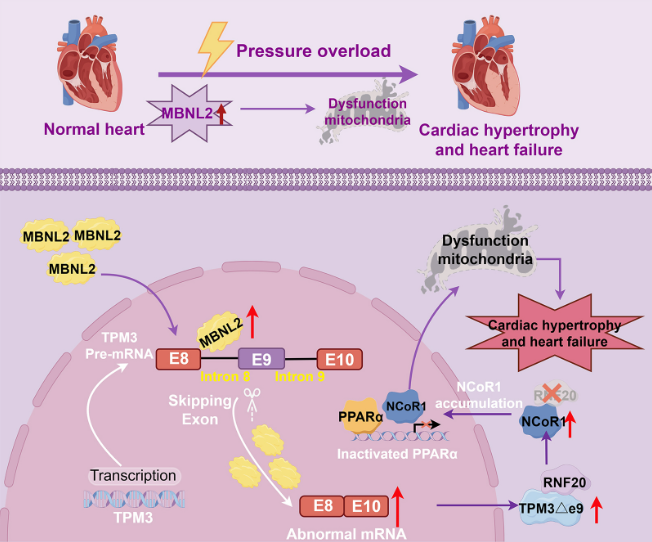
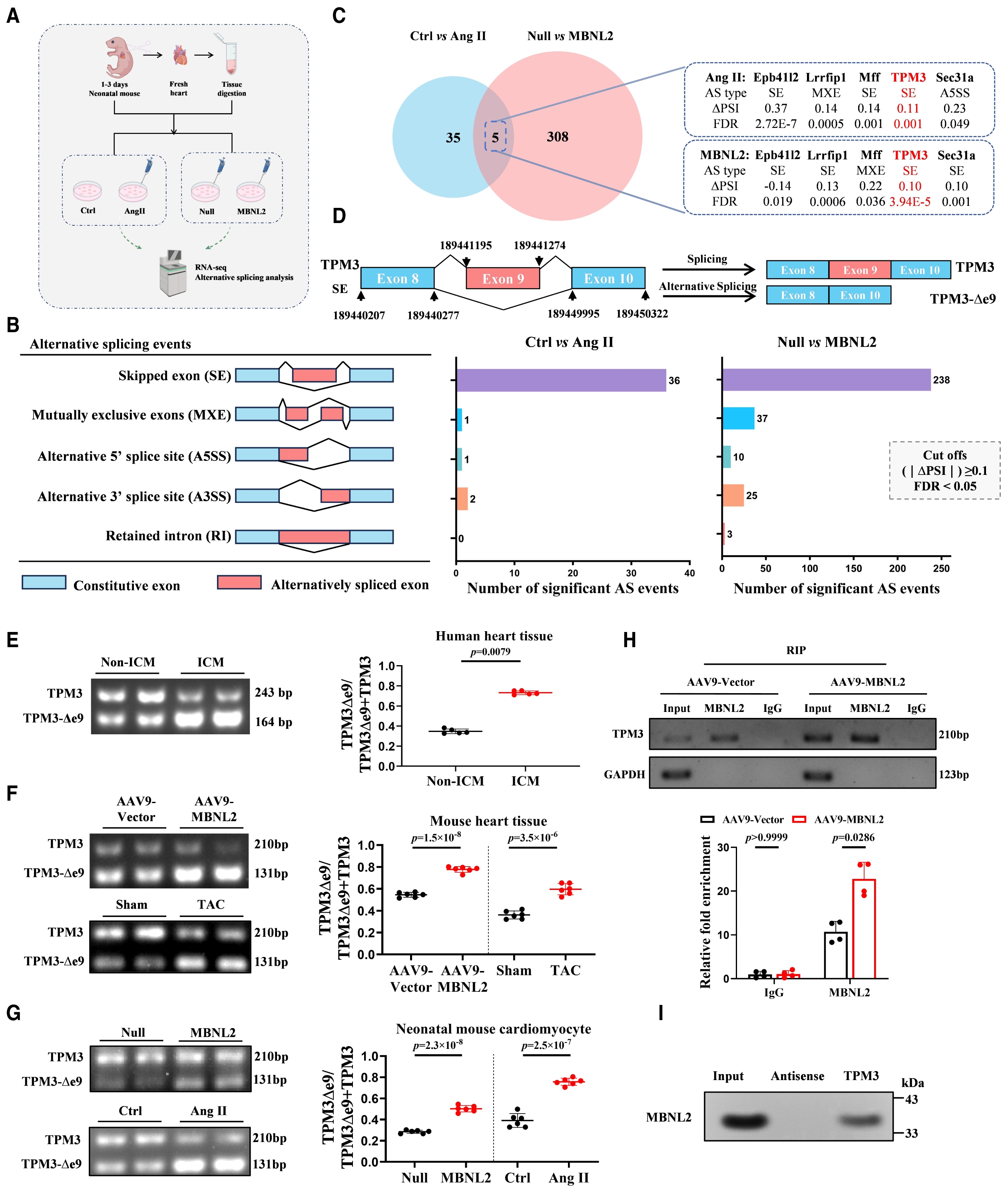
This study reveals the role of RNA-binding protein MBNL2 in pathological cardiac hypertrophy. MBNL2 is upregulated in hypertrophic hearts, and cardiomyocyte-specific overexpression can induce hypertrophy and dysfunction; the mechanism is related to promoting TPM3 exon 9 skipping, generating TPM3-Δe9, and impairing mitochondrial function.
(2) Background
Cardiac hypertrophy is an important contributor to the development of heart failure, and effective interventions remain limited. Alternative splicing is an important regulatory mechanism in cardiac hypertrophy, but the key pathways have not been fully elucidated. As an RNA-binding protein, MBNL2 participates in splicing regulation, but its role in pressure overload-induced cardiac hypertrophy remains unclear.
(3) Main Content
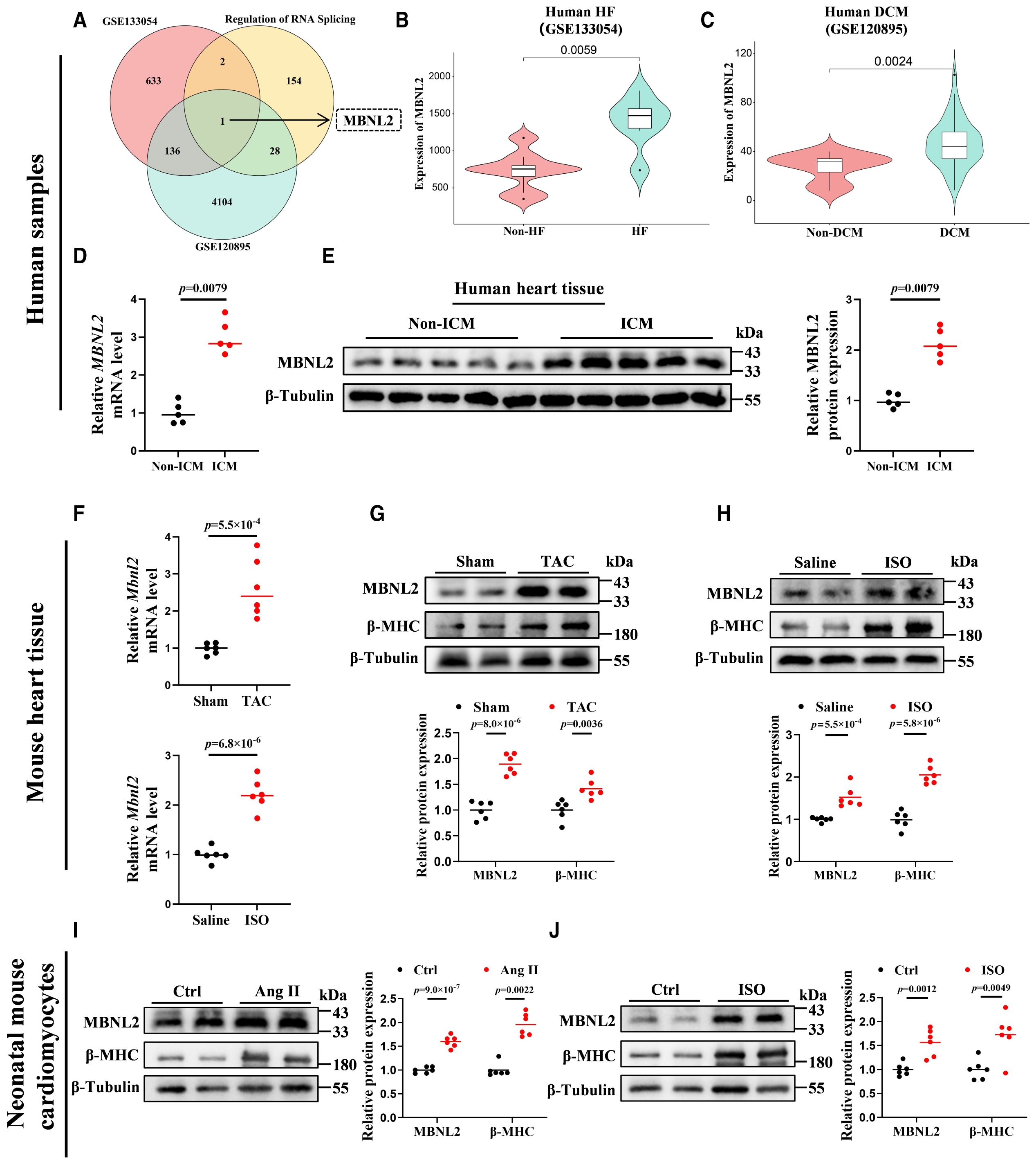
The study shows that MBNL2 is elevated in human ischemic cardiomyopathy and hypertrophic mouse hearts. MBNL2 binds TPM3 pre-mRNA, promotes exon 9 skipping, and increases TPM3-Δe9. TPM3-Δe9 aggravates oxidative stress and mitochondrial damage and affects metabolism through the RNF20/NCoR1/PPARα axis. MBNL2 knockout or TPM3-Δe9 knockdown alleviates hypertrophy and dysfunction.
(4) Study Design
AAV9-mediated cardiomyocyte overexpression of MBNL2 was used, cardiomyocyte-specific MBNL2 knockout mice were generated, and TAC and isoproterenol were used to induce hypertrophy. Echocardiography, histology, RNA sequencing, alternative splicing analysis, RIP, RNA pull-down, Seahorse, JC-1, and in vitro NMCM overexpression/knockdown experiments were combined.
(5) Results
MBNL2 is upregulated in human and mouse hypertrophic hearts. Overexpression of MBNL2 is sufficient to induce cardiac hypertrophy, fibrosis, and cardiac dysfunction; knockout of MBNL2 attenuates pressure overload- and isoproterenol-induced hypertrophy and dysfunction. TPM3-Δe9 mediates the effects of MBNL2, and knockdown of TPM3-Δe9 improves mitochondrial function and alleviates hypertrophy. The mechanism involves increased NCoR1 and decreased PPARα signaling, and a PPARα inhibitor partially reverses the protective effect.
(6) Future Directions
Future studies need to validate other splicing targets such as Lrrfip1, Epb4112, and Mff, clarify cell-type specificity and differences in disease context, unify experimental models, and further dissect the spatiotemporal relationship between the MBNL2–TPM3-Δe9 axis and mitochondrial metabolism, providing a basis for mechanistic research on cardiac remodeling.
We provide full-process services for various material designs (including highly innovative scheme design, preparation, characterization, in vitro and in vivo validation (cell/animal experiments), etc.): a postdoctoral team (with multiple high-impact publications in Zone 1 journals) can meet all kinds of tricky and challenging requirements, including hydrogels / drug delivery / nanomaterials / polymers / liposomes / microneedle drug delivery, etc. We can assist with project design / NSFC grant applications / publication of high-impact Zone 1 and Zone 2 papers in journals such as AFM, SCI, AM, etc. Welcome to consult 👇️
17768014569 (Senior Engineer Gao)
17761925168 (Engineer Zhang)
18013729810 (Engineer Yang)
18915694570
Previous: Daily Bone Remodeling
Next: Daily Research Idea: T