

Daily Nanozyme Idea: pH-Activatable Nanozyme for Breast Cancer Bone Metastasis
(1) Abstract:
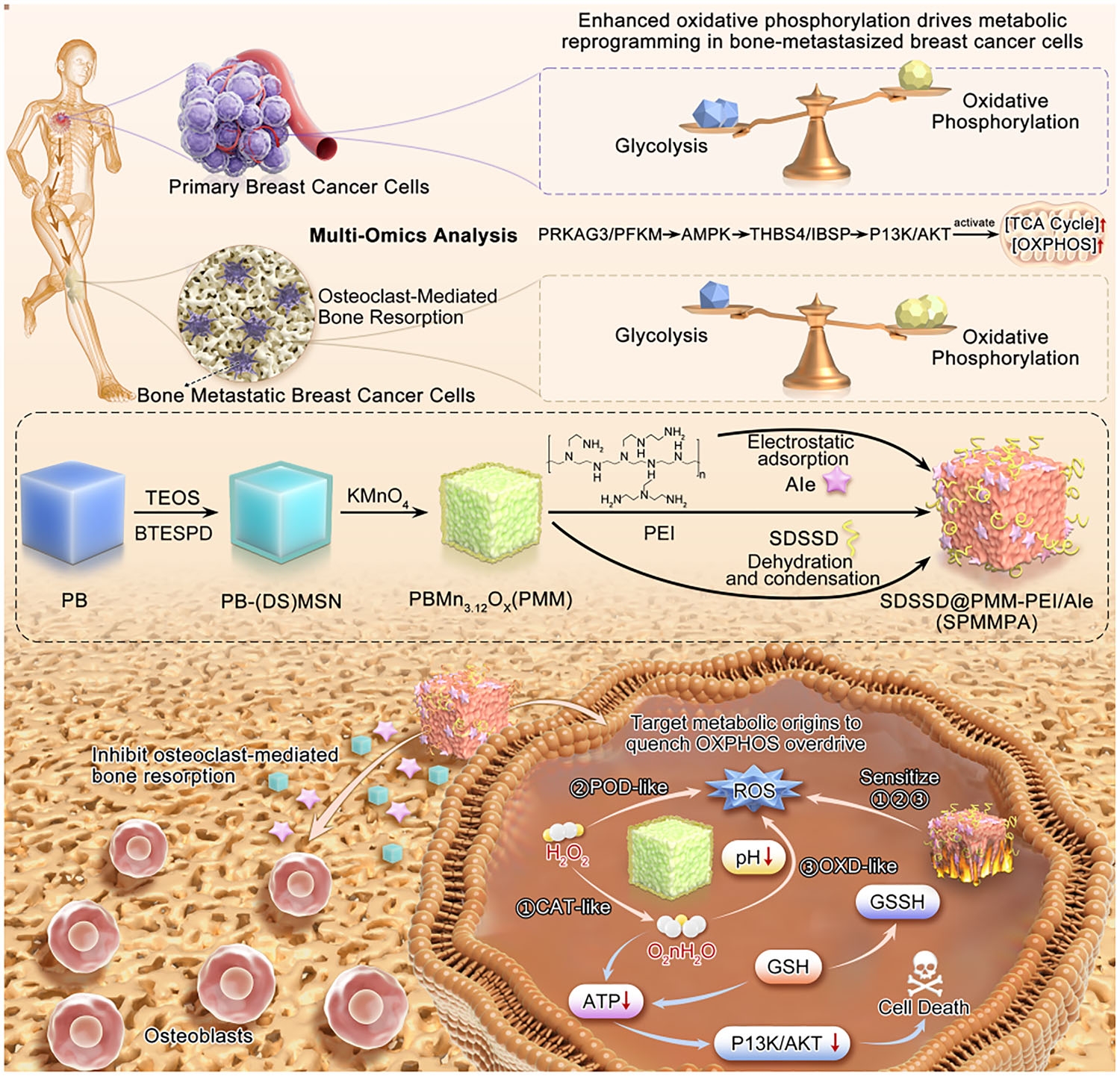
This study develops a bone-targeted pH-activatable nanozyme, SPMMPA, for intervening in breast cancer bone metastasis. Its core-shell structure enhances catalytic activity in the acidic microenvironment, promotes reactive oxygen species generation and glutathione depletion, impairs mitochondrial respiration and energy metabolism, and coordinately suppresses osteoclast activity to preserve bone structure.
(2) Background:
Breast cancer bone metastasis is dominated by osteolytic destruction, and tumor cells form a vicious cycle with the bone microenvironment. Multi-omics suggest enhanced oxidative phosphorylation in bone-metastatic cells, representing a metabolic vulnerability; existing bone-targeting strategies rarely coordinate tumor metabolic regulation with bone homeostasis.
(3) Main Content:
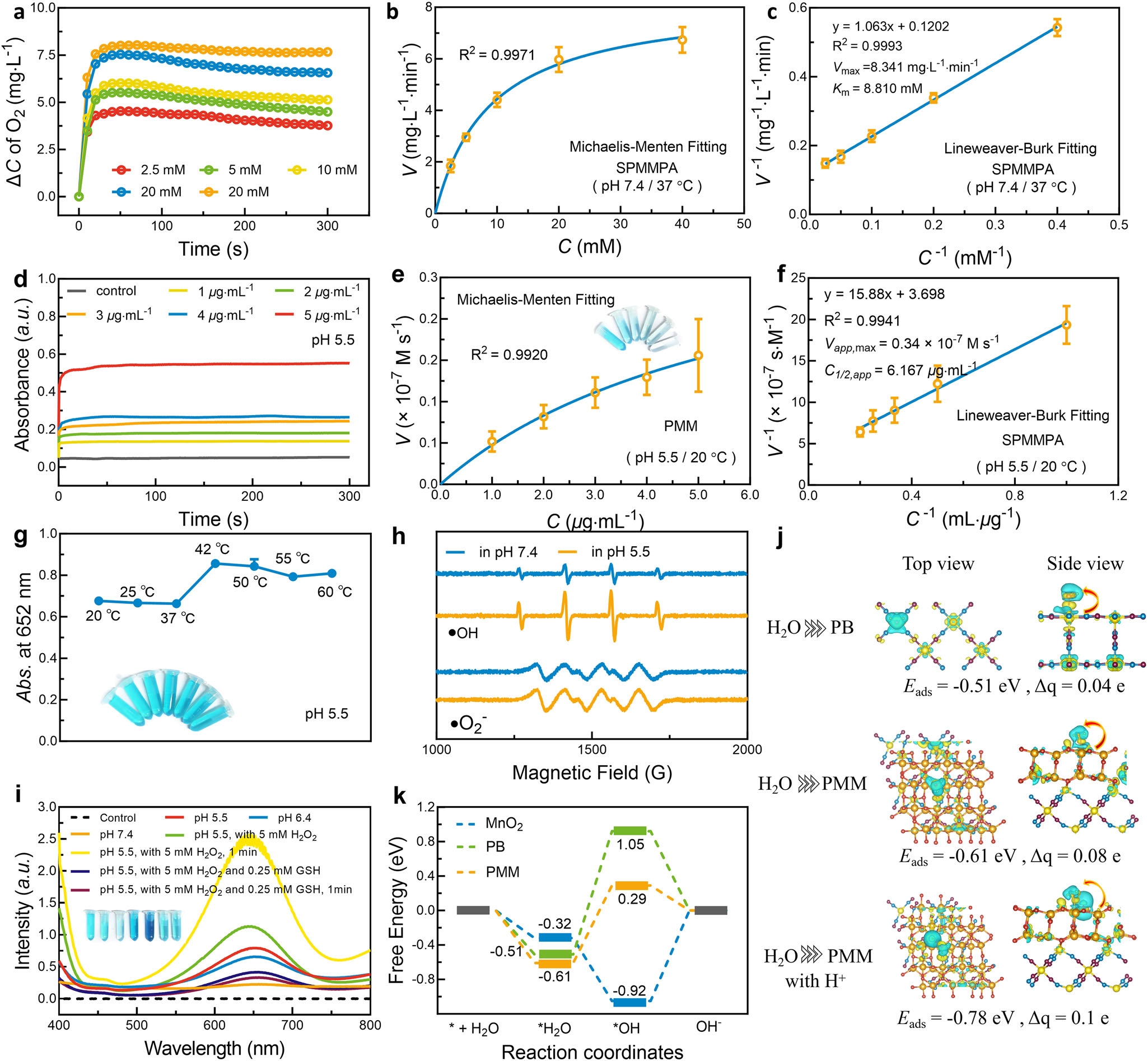
SPMMPA comprises a Prussian blue core, a disulfide-bridged mesoporous silica layer, and a manganese oxide shell, functionalized with PEI, alendronate, and SDSSD peptide. Under acidic conditions, its catalase-, peroxidase-, and oxidase-like activities are enhanced, accompanied by photothermal effects; alendronate and silicon release participate in suppressing osteoclasts and protecting bone structure.

(4) Study Design:
Multi-omics analysis, material synthesis and characterization, multi-enzyme kinetics, electron paramagnetic resonance, and theoretical calculations were combined. In vitro, breast cancer cells were co-cultured with osteoblast-like cells to assess mitochondrial function, reactive oxygen species, glutathione, ATP, and migration. In vivo, a mouse bone metastasis model was established to evaluate tumor growth, osteolysis, histology, and organ distribution.
(5) Results:
The acidic microenvironment enhanced SPMMPA catalytic activity, increased reactive oxygen species, decreased glutathione, induced mitochondrial membrane potential depolarization, reduced oxygen consumption and ATP levels, and downregulated PGC-1α and COX IV. Treatment inhibited tumor cell migration and osteoclast formation; in vivo, it suppressed tumors and alleviated osteolysis without obvious toxicity in the assays performed.
(6) Future Directions:
Future work should clarify the causal chain between catalytic activity and metabolic regulation and distinguish the contributions of individual enzyme activities and photothermal effects. Metabolic flux, bone-targeting specificity, and immune microenvironment analyses should be integrated to evaluate long-term safety and bone homeostasis, with delivery and stimulation parameters optimized.
We provide full-process services for various material designs (including highly innovative scheme design, preparation, characterization, in vitro and in vivo validation (cell/animal experiments), etc.): a postdoctoral team (with multiple high-impact publications in Zone 1 journals) can meet all kinds of tricky and challenging requirements, including hydrogels / drug delivery / nanomaterials / polymers / liposomes / microneedle drug delivery, etc. We can assist with project design / NSFC grant applications / publication of high-impact Zone 1 and Zone 2 papers in journals such as AFM, SCI, AM, etc. Welcome to consult 👇️
17768014569 (Senior Engineer Gao)
17761925168 (Engineer Zhang)
18013729810 (Engineer Yang)
18915694570
Previous: Daily Hydrogel Idea: U
Next: Nanomaterial Customiza