

Silicate Biomaterials and Vascularized Callus Organoids
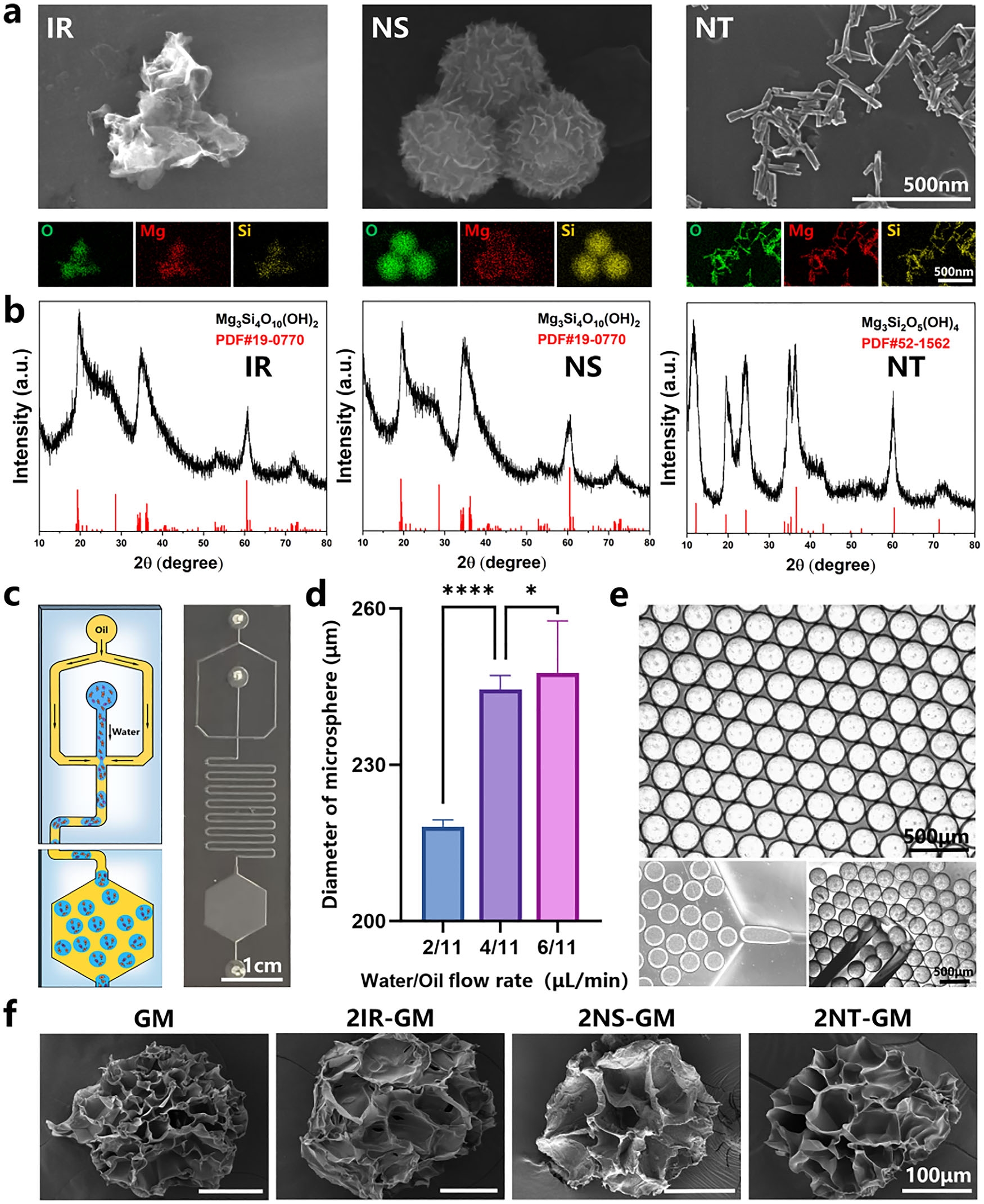
Silicate biomaterials are used to achieve precise regulation of the mechanical microenvironment. This composite hydrogel material is fabricated via droplet microfluidic technology, which enables the incorporation of magnesium silicate with diverse morphologies (nanospheres, nanotubes, irregular shapes) into the GelMA matrix. When applied as an organoid culture scaffold, one-dimensional nanotube structures can establish efficient load-transfer pathways within the hydrogel network, generating a continuous and uniform stress field distribution. This markedly enhances the matrix stiffness of the hydrogel and provides a suitable mechanical microenvironment for organoid development.
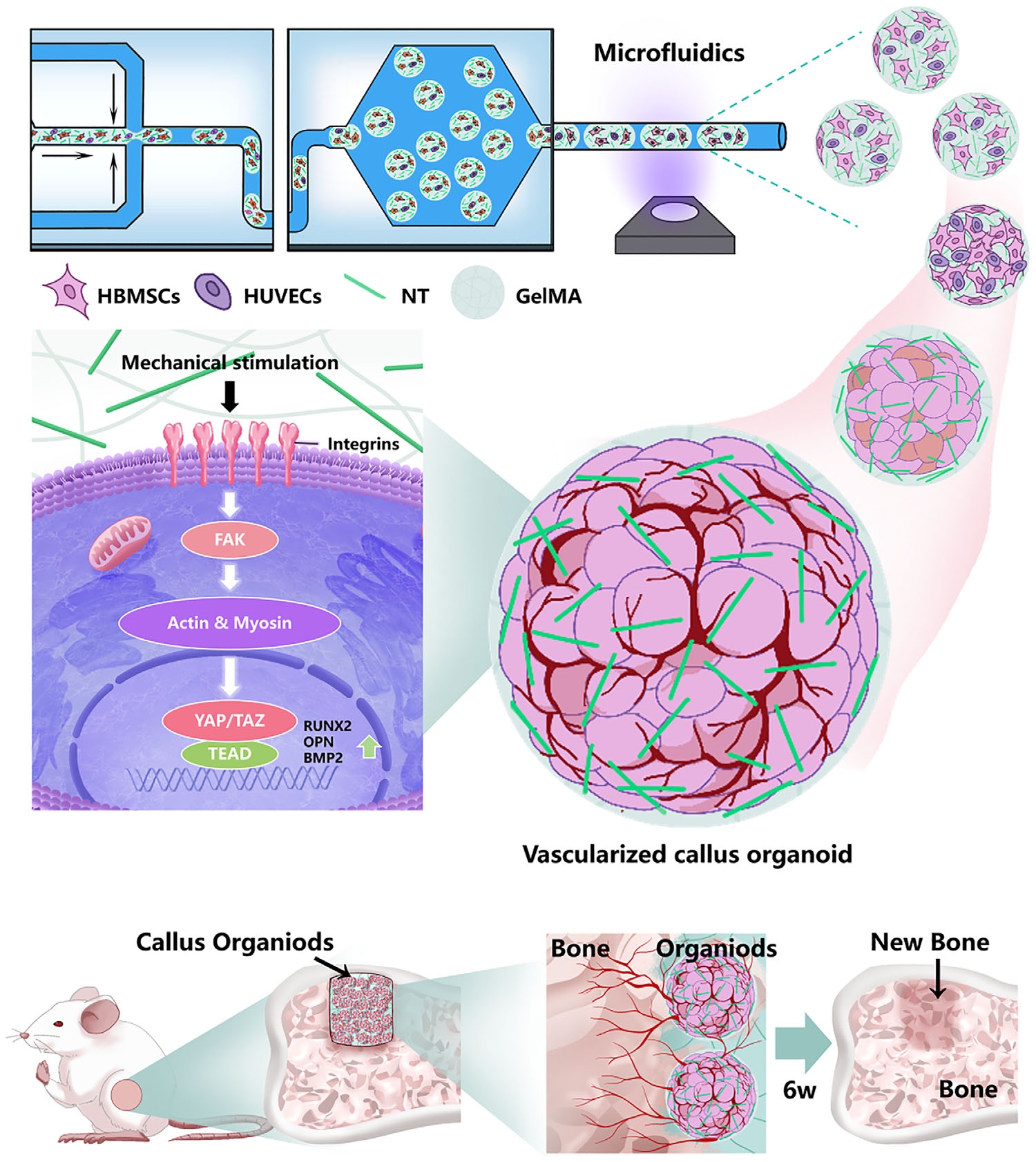
Silicate biomaterials are utilized to facilitate vascular network assembly and osteogenic differentiation. This biomaterial can sustainably release bioactive ions (Mg²⁺ and silicate ions) during culture. When organoids are exposed to this ionic microenvironment, relevant signaling pathways are activated, inducing the differentiation of bone marrow mesenchymal stem cells toward chondrogenic and osteogenic lineages and promoting endothelial cells to form stable luminal structures. Meanwhile, the topographical features on the material surface provide biomimetic cues to guide endothelial cell migration, thereby forming structurally intact vascular networks inside the organoids.
Silicate biomaterials are applied to modulate mechanotransduction for in vivo tissue repair. After this vascularized callus organoid is implanted into bone defect sites, it not only promotes matrix mineralization through the release of bioactive ions, but also activates cellular mechanotransduction pathways (such as nuclear translocation of YAP protein) relying on the excellent mechanical properties of the material to upregulate the expression of osteogenesis-related genes. Furthermore, the inherent vascularized structure of the organoid further accelerates angiogenesis and tissue integration in the central region of the defect, effectively improving the quality of bone regeneration.
We provide a full range of materials design services covering highly innovative scheme design, preparation, characterization, in vitro and in vivo validation (cell/animal experiments), etc. Our postdoctoral team, with numerous high-impact Q1 publications, can tackle your most challenging and complex research needs. Our areas include hydrogels, drug delivery, nanomaterials, polymers, liposomes, microneedle drug delivery and more. We support project design, National Natural Science Foundation application, and publication of high-impact Q1/Q2 papers in journals such as AFM, SCI, AM. Feel free to contact us👇️
17768014569 (Senior Engineer)
17761925168 (Engineer Zhang)
18013729810 (Engineer Yang)
18915694570
Previous: BK Oncolytic virus pla
Next: Nano-material Customiz