

GSH depletion nanovesicles in cold tumor immunotherapy
The application of GSH-consuming nanovesicles in cold tumor immunotherapy is a new therapeutic technique that uses nanocicles to reduce the level of glutathione (GSH) in tumor cells to enhance the tumor immune response. GSH is an important antioxidant that protects tumor cells from damage by reactive oxygen species (ROS), thereby reducing tumor cell death and apoptosis. GSH consumption type nano vesicles is a kind of high biocompatibility, low toxicity, high stability and tunability of nanomaterials, can through different synthesis methods and surface modification strategy, achieve targeted delivery and response release of tumor, and with other treatments such as photodynamic therapy, chemodynamic therapy, immunotherapy, combination therapy, improve the efficiency and safety of tumor treatment. GSH-consuming nanovesicles can degrade in the acidic tumor microenvironment, thus releasing payloads that can consume or remove GSH, such as disulfide (DSS), diethylmaleimide (DEM), selenium oxide (SeO2), etc. This could reduce the level of GSH in the tumor cells, thus increasing the accumulation of ROS, leading to the death and apoptosis of the tumor cells. Meanwhile, it can also enhance the effects of other treatments, such as photodynamic therapy and chemodynamic therapy, which can use ROS to kill tumor cells; immunotherapy can use ROS to activate antigen-presenting cells and T cells, thus enhancing tumor immune response. Through such synergy, GSH depletion nanovesicles can achieve effective treatment of cold tumors, with the advantages of high efficiency, low toxicity, and multifunction, which is a promising medical technology.
A multifunctional drug vehicle system based on dimeric vesicles (dimersomes) for iron death (ferroptosis) and immune synergy therapy for cold tumors. The system uses dimeric vesicles as a carrier, loading selenoglutamic acid (Se-Glu) as GSH depletion agent and iron ion (Fe3 +) as iron death inducer, and improves its stability and biocompatibility through polyethylene glycol (PEG) modification. This system enables effective killing of cold tumor cells in in vitro and in vivo models and monitors its distribution and degradation in vivo by nuclide imaging.
The application of GSH-consuming nanovesicles in cold tumor immunotherapy is a new therapeutic technique that uses nanocicles to reduce the level of glutathione (GSH) in tumor cells to enhance the tumor immune response. GSH is an important antioxidant that protects tumor cells from damage by reactive oxygen species (ROS), thereby reducing tumor cell death and apoptosis. GSH consumption type nano vesicles is a kind of high biocompatibility, low toxicity, high stability and tunability of nanomaterials, can through different synthesis methods and surface modification strategy, achieve targeted delivery and response release of tumor, and with other treatments such as photodynamic therapy, chemodynamic therapy, immunotherapy, combination therapy, improve the efficiency and safety of tumor treatment. GSH-consuming nanovesicles can degrade in the acidic tumor microenvironment, thus releasing payloads that can consume or remove GSH, such as disulfide (DSS), diethylmaleimide (DEM), selenium oxide (SeO2), etc. This could reduce the level of GSH in the tumor cells, thus increasing the accumulation of ROS, leading to the death and apoptosis of the tumor cells. Meanwhile, it can also enhance the effects of other treatments, such as photodynamic therapy and chemodynamic therapy, which can use ROS to kill tumor cells; immunotherapy can use ROS to activate antigen-presenting cells and T cells, thus enhancing tumor immune response. Through such synergy, GSH depletion nanovesicles can achieve effective treatment of cold tumors, with the advantages of high efficiency, low toxicity, and multifunction, which is a promising medical technology.
A multifunctional drug vehicle system based on dimeric vesicles (dimersomes) for iron death (ferroptosis) and immune synergy therapy for cold tumors. The system uses dimeric vesicles as a carrier, loading selenoglutamic acid (Se-Glu) as GSH depletion agent and iron ion (Fe3 +) as iron death inducer, and improves its stability and biocompatibility through polyethylene glycol (PEG) modification. This system enables effective killing of cold tumor cells in in vitro and in vivo models and monitors its distribution and degradation in vivo by nuclide imaging.
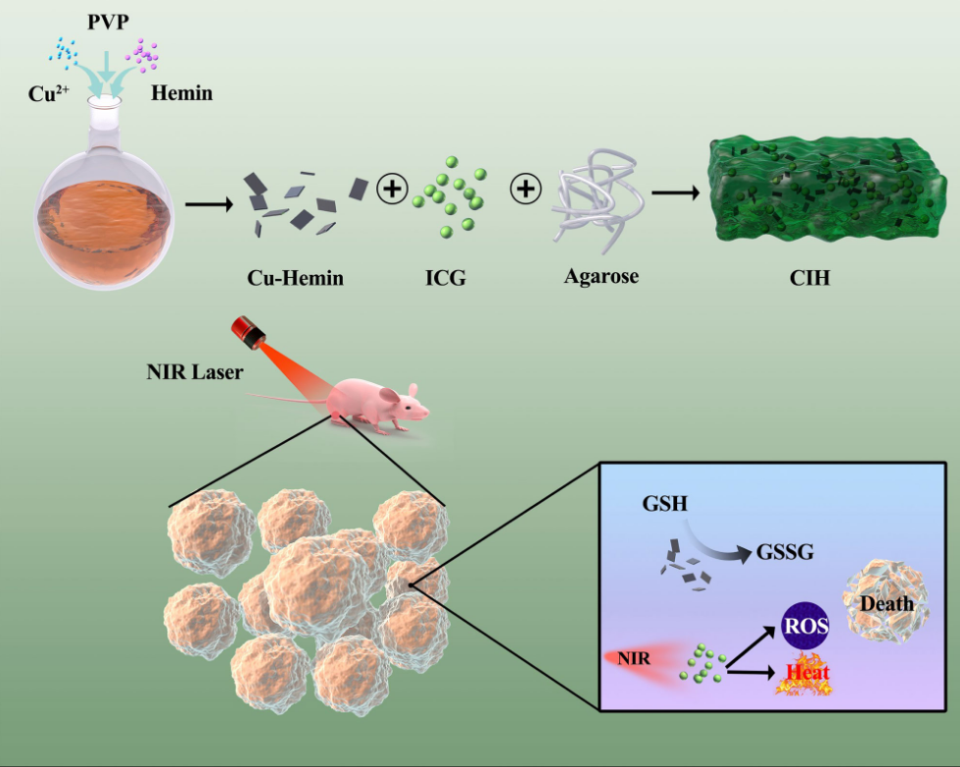
A nanocesicle-based chemodynamic therapeutic agent to achieve chemodynamic and immune synergistic therapy for cold tumors. The agent uses nanovesicles as a carrier, loaded disulfide powder (DSS) as a GSH depletion agent and iron oxide (Fe3O4) as a chemokinetic inducer, and improves its targeting through folate (FA) modification. This agent enables effective killing of cold tumor cells in in vitro and in vivo models and monitors their in vivo distribution and degradation by nuclear magnetic imaging.
Reference Documentation:
[1]GSH Depletion-Induced Activation of Nanovesicles for Enhanced Chemodynamic Therapy and Immunotherapy of “Cold” Tumor.
18915694570
Previous: Environmental responsi
Next: the end...